
The Rig
If you’re trying to figure out how to rig a floating line for summer steelhead on a fly rod, here’s the simple, no-BS version.
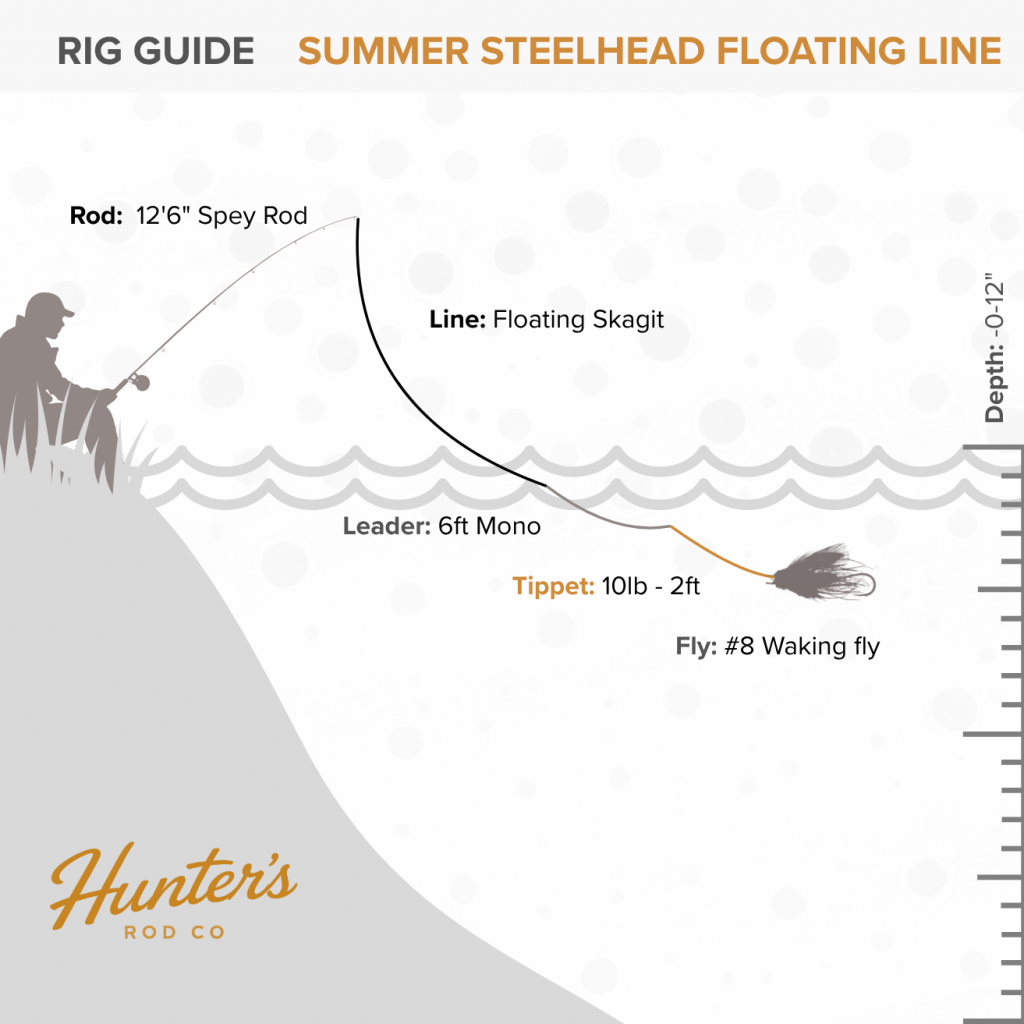
Use this exact setup:
Rod → Line → Leader → Tippet → Fly
- Rod: 6–7 wt, 12’6″–13’6″ spey rod
- Line: Floating (Scandi or floating Skagit)
- Leader: 6–8 ft monofilament
- Tippet: 2–3 ft of 8–12 lb fluorocarbon
- Fly: #4–#8 waking or sparse wet fly
This is one of those rigs that looks almost too simple, but when conditions are right, it just works.
Rig Info
Depth
Surface to top 12”
Temp
Warmer Summer Water
Season
Summer (June–September)
Location
Rivers
Water Type
Riffles, tailouts, glides
Not sure what to rig for your trip?
I built a simple tool that gives you a starting rig based on where you’re fishing, when you’re going, and the rods you already own.
Fill out the form below, and you’ll get a setup you can actually use on the water, sent right to you.
Short Explanation
This is a surface-focused setup for when summer steelhead are actually willing to move.
A floating line keeps everything riding high, which gives you way more control over your swing compared to sink tips. The shorter leader helps turn flies over cleanly and keeps things predictable.
This is one of the most fun ways to fish for steelhead. When they come up for a fly, there’s nothing better.
How to Fish
This setup is all about control, not power.
- Cast Angle: Slightly downstream (not straight across)
- Mending: Light upstream mend right after the cast
- Tension: Keep it steady, not too tight
- Swing Shape: Smooth, controlled arc across the river
You want the fly to move naturally, not rip across the current.
At the end of the swing, let it hang for a few seconds. Don’t rush this, fish eat here all the time
Gear Breakdown
Here’s the setup broken down without overcomplicating it:

Rod
- Weight: 6–7 wt
- Length: 12’6″–13’6″ (spey)
Longer rods just make life easier here, better mending, better swing control. If you’re on a switch rod, it’ll still work, just expect a little less reach.

Reel
- Type: Arbor
- Size: 6–7 wt
An Arbor Reel is a wide-diameter spool, allowing for faster line retrieval, more consistent drag tension, and reduced line memory

Line
- Weight: matched to rod grain window
- Type: floating (Scandi or floating Skagit)
- Scandi = cleaner, lighter presentation
- Skagit = easier in wind or with bulkier flies
If I had to pick one for most summer fishing, I’d lean Scandi, but Skagit definitely has its place.

Leader
- Length: 6–8 ft
- Weight: ~10–15 lb butt section
- Material: monofilament
Shorter leaders are your friend here. They help turnover and keep everything tight and controlled.

Tippet
- Weight: 8–12 lb
- Length: 2–3 ft
- Material: fluorocarbon (or mono)
10 lb is a great starting point. Go lighter in super clear water, heavier if fish are aggressive or you’re around structure.

Fly
- Type: waking fly or sparse wet
- Size: #4–#8
Think muddlers, bombers, or just simple, low-profile patterns. You don’t need anything fancy.
Conditions
This rig is all about timing and water conditions.
Best Conditions
- Low to medium flows
- Clear water
- Stable summer temps
- Classic swing water (riffles, tailouts, glides)
This is when fish are comfortable and willing to move a bit for your fly.
When This Doesn’t Work
- High or dirty water
- Cold water (fish hugging the bottom)
- Fast, heavy water where you can’t control the swing
If fish aren’t coming up, don’t force it—this rig isn’t meant to fish deep.
Adjustments
If something feels off, here’s how to fix it:
Fish are following but not eating
- Downsize the fly
- Lengthen tippet slightly
- Slow the swing down
Fly is skating too aggressively
- Reduce tension
- Mend a bit more
- Switch to a smaller or less buoyant fly
Leader won’t turn over cleanly
- Shorten leader
- Use slightly stiffer material
Feels like you need more depth
- You probably do
- Switch rigs instead of trying to force this one deeper
One opinion here: people try way too hard to make this rig do everything. It’s a surface tool—use it that way.
Bottom Line
This is one of the simplest and most fun steelhead rigs you can fish.
When conditions line up, a floating line gives you maximum control and a really clean presentation. It’s not always the right choice—but when it is, it’s hard to beat.
FAQ
What is the best leader length for a floating line steelhead rig?
6–8 feet is the sweet spot. Long enough for presentation, short enough for control.
What tippet size should I use for summer steelhead?
Start with 10 lb and adjust from there depending on water clarity and fish behavior.
Can I use this with a switch or single-hand rod?
Yep. You may tweak leader length a bit, but the overall setup stays the same.
What flies work best for this setup?
Waking flies and sparse wets in sizes #4–#8 are the most consistent.
Not sure what to rig for your trip?
I built a simple tool that gives you a starting rig based on where you’re fishing, when you’re going, and the rods you already own.
Fill out the form below, and you’ll get a setup you can actually use on the water day of sent right to you.